
Termites are silent destroyers, capable of causing thousands of dollars in damage before homeowners even notice their presence. While many people focus on protecting the inside of their homes, the truth is that landscaping choices outside your property often create the perfect environment for termites to thrive. By understanding these mistakes, you can take proactive steps to safeguard your home.
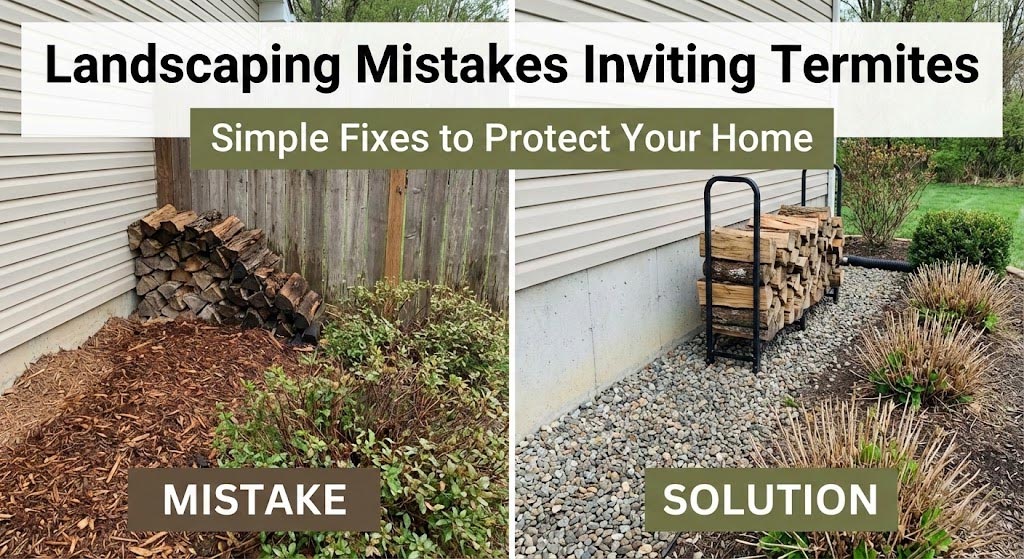
Here are the most common landscaping mistakes that can increase termite risk—and how to avoid them.
1. Mulch Placed Too Close to the House
Organic mulch looks great in garden beds, but it also holds moisture and provides food for termites.
Why it’s a problem:
- Retains moisture against foundations
- Creates hidden access points for termites
- Makes termite activity harder to detect
What to do instead:
Keep mulch at least 150mm away from your home’s slab and walls. Consider using inorganic alternatives like gravel near the building perimeter.
2. Stacking Firewood Against the House
Firewood is a direct source of cellulose, termites’ primary food. Storing logs against exterior walls or in damp areas makes it easy for termites to migrate from the woodpile into your home. Always store firewood off the ground and away from the house.
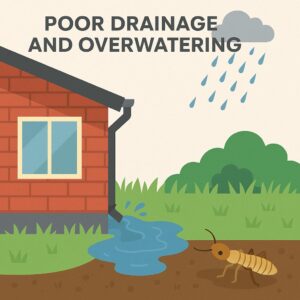
3. Poor Drainage and Overwatering
Moisture is one of the biggest termite attractants. Overwatering lawns, clogged gutters, or improper drainage around foundations create damp soil conditions where termites thrive. Ensuring proper grading and maintaining gutters can significantly reduce risk
Common drainage issues include:
- Blocked or damaged stormwater drains
- Incorrect ground levels sloping toward the house
- Garden beds trapping water against walls
Excess moisture weakens structural materials and creates ideal conditions for termites. Professional drainage solutions and waterproofing inspections can help prevent long-term damage.
4. Dense Vegetation Near Walls
Shrubs, trees, and thick vegetation planted too close to walls trap moisture and provide shelter. Roots and branches can also create pathways for termites to access your home. Maintain clear space between vegetation and structures to discourage infestations.
oots and overhanging branches can also form hidden pathways, allowing termites easier access into wall cavities and structural timber. Over time, this excess moisture can affect wall waterproofing and increase the risk of leaks and damp issues.
How to reduce the risk:
- Maintain a clear gap between plants and exterior walls
- Prune shrubs and trees regularly to improve airflow
- Avoid planting large-rooted trees near foundations
5. Timber Features in Direct Contact with Soil
Deck posts, fences, or siding that directly touch soil provide termites with easy entry points. This mistake bypasses protective barriers and accelerates infestations. Use concrete bases or treated wood to prevent direct contact. Sleepers, retaining walls, garden edging, and pergola posts made from timber can act as termite highways.
High-risk timber features include:
- Untreated pine sleepers
- Timber fences attached to the house
- Deck posts embedded directly into soil

Use termite-resistant materials or ensure timber is properly treated and isolated from soil with concrete footings or metal stirrups.
6. Poor Drainage and Overwatering
Moisture is one of the biggest termite attractants. Overwatering lawns, clogged gutters, or improper drainage around foundations create damp soil conditions where termites thrive. Ensuring proper grading and maintaining gutters can significantly reduce risk.
Termites thrive in:
- Constantly wet soil
- Poorly ventilated areas
- Moist wall cavities and subfloors
Install efficient irrigation systems and avoid watering close to the house. This also helps protect waterproofing membranes and reduces leak-related issues.
How to Protect Your Home from Termites
- Keep mulch and vegetation away from foundations.
- Store firewood off the ground and at least several metres from the house.
- Ensure proper drainage and avoid overwatering.
- Use treated wood or concrete bases for outdoor structures.
- Remove stumps, roots, and debris promptly.
Smart landscaping plays a key role in termite prevention, especially in coastal areas like the Gold Coast where moisture is a constant factor. Good drainage, proper soil levels, and moisture control work hand-in-hand with professional waterproofing solutions to keep your home protected.
If you’re concerned about moisture issues, leaks, or hidden termite risks around your property, a professional inspection can identify problem areas before they turn into costly repairs.
Taking action now can save you thousands later—and keep termites out where they belong.